
The Challenge: A Critical Fan With No Downtime Window
Client: Leading multinational food company.
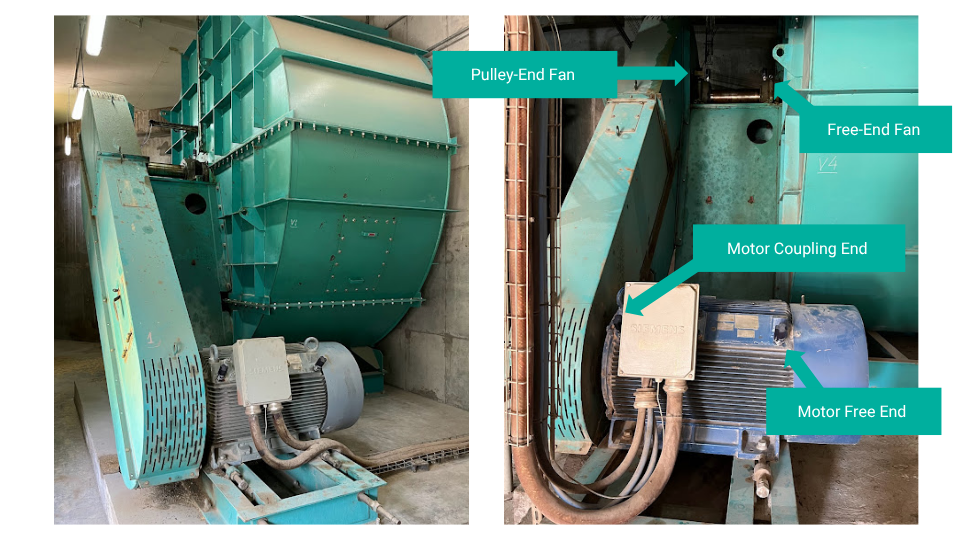
Asset: Industrial drying line running 24/7, belt-driven fan under variable load, located in a hard-to-reach area outside daily inspection rounds — exactly the kind of equipment manual rounds tend to miss until it fails.
The Problem: Early Bearing Wear Detected by Vibration Analysis
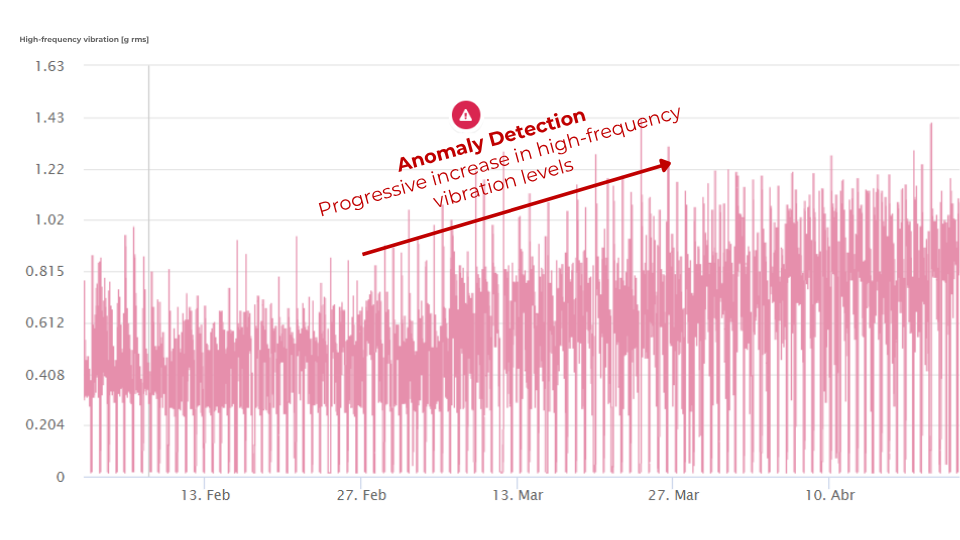
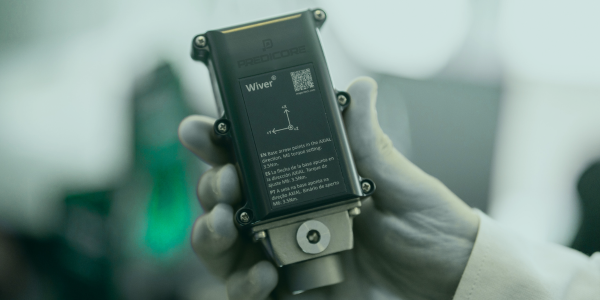
Between February 23 and March 13, Predicore’s Wiver™ sensor detected a progressive increase in high-frequency vibration on the fan’s non-drive-end (NDE) bearing. Predicore AI™ automatically flagged the anomaly as levels crossed the warning threshold, pointing to a lubrication deficiency with early bearing wear indicators.
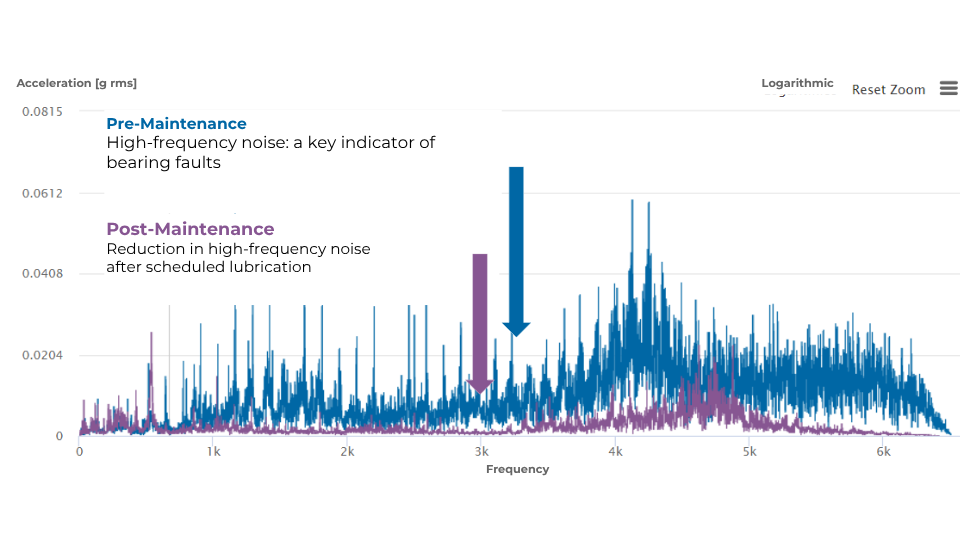
The Monitoring Center — staffed by ISO 18436 CAT II & III certified vibration analysts — reviewed and validated the findings through FFT analysis.
Left undetected, the fault would have progressed to catastrophic bearing failure and an unplanned stoppage on a line with no available downtime windows.
The Solution: A Planned Response, No Emergency Shutdown
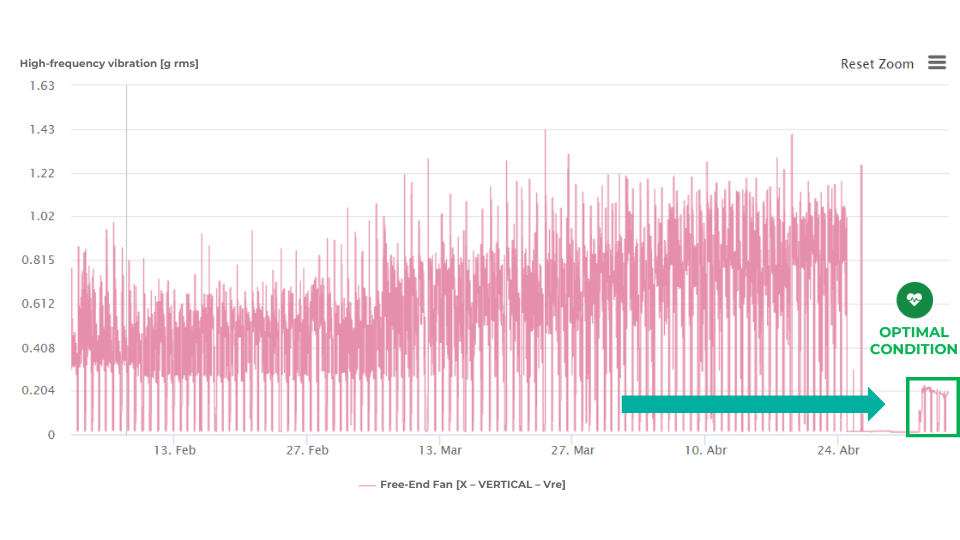
The Monitoring Center guided the client through a structured, condition-based response: scheduled lubrication cycles from March 13 to April 24, followed by a planned bearing replacement during an available operational window — no emergency shutdown, no production impact.
Stats
Results
-
USD $75,000+
Estimated savings
-
Planned — zero production impact
Maintenance executed
-
10 hours
Downtime avoided
-
None
Overtime costs
“Their early alerts help us schedule shutdowns and address minor deviations before they escalate.” — Eng. N. Suarez, Engineering & Maintenance Manager
Frequently Asked Questions
How can a bearing fault be detected before it fails? Continuous vibration monitoring tracks high-frequency signals that rise as a bearing begins to wear. When levels cross a defined threshold, the anomaly is flagged and validated by certified analysts using FFT analysis — typically weeks before a failure would occur.
What is condition monitoring in food manufacturing? Condition monitoring uses sensors to track the real-time health of critical equipment like fans, motors, and pumps. In 24/7 food plants with no downtime windows, it lets teams move from reactive repairs to planned maintenance, protecting both uptime and food safety.
How much downtime can predictive maintenance prevent? It depends on the asset, but in this case early detection avoided roughly 10 hours of unplanned downtime and over $75,000 in costs by converting an emergency failure into a scheduled repair.