How Accelerometers and Vibration Sensors Work

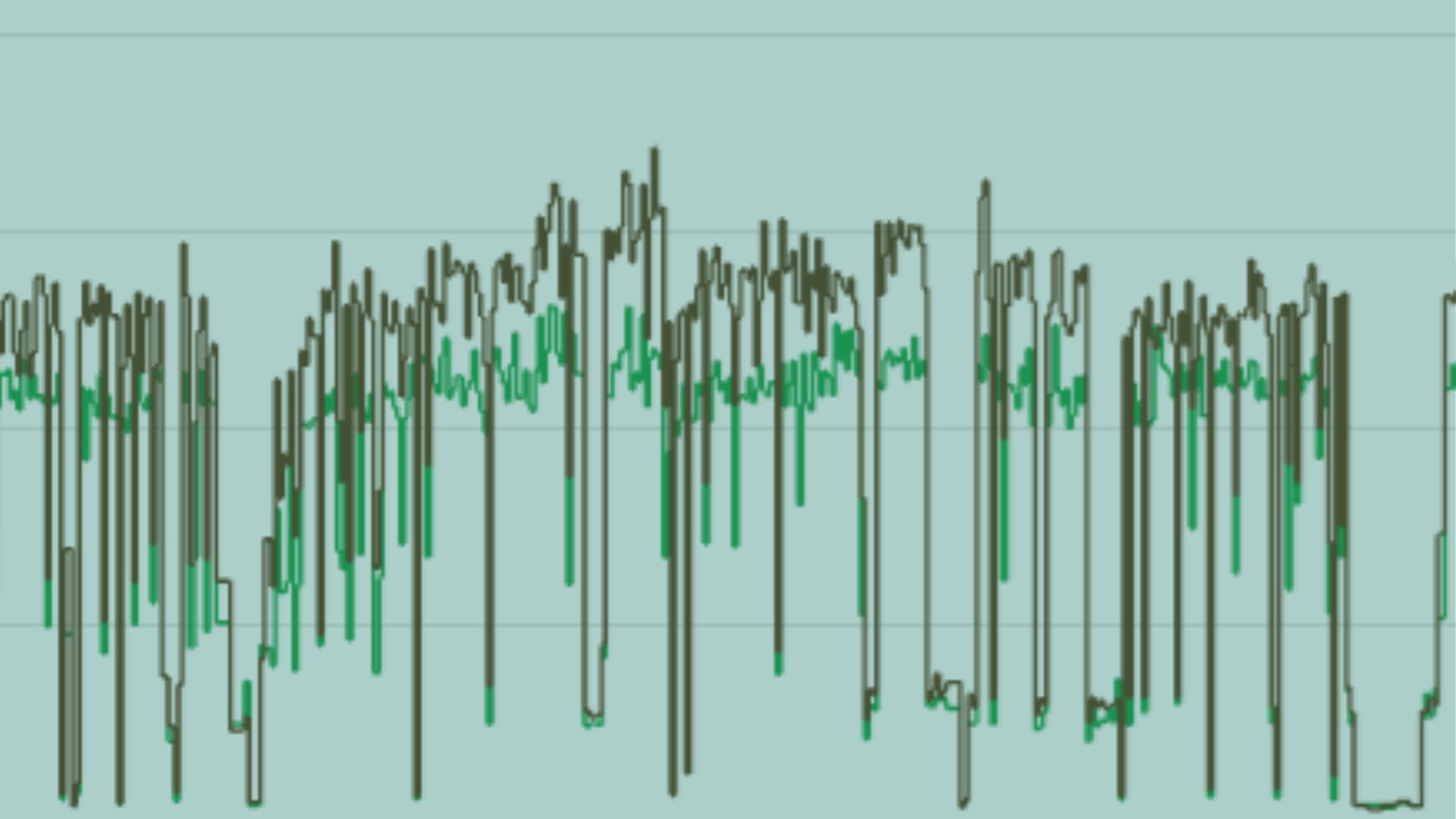
A vibration sensor is a device that converts mechanical motion into an electrical signal. This signal is used to measure the amplitude, frequency, and acceleration of vibrations occurring in operating equipment. They are key in predictive monitoring, as they allow fault modes to be identified before they occur.

The accelerometer is the most common type of vibration sensor. It measures the acceleration of motion in one or more directions and can convert that acceleration into velocity and displacement values through integration. This makes it a versatile sensor for monitoring the condition of rotating machines, motors, compressors, and gearboxes.

Types of Accelerometers

  • Piezoelectric: the most widely used in industrial environments. High sensitivity, ideal for monitoring mechanical vibrations.
  • Capacitive: used at low frequencies. Lower sensitivity but useful for specific applications.
  • MEMS (Micro Electro Mechanical Systems): compact, cost-effective, and low power consumption. Key in wireless sensors for predictive maintenance.

How They Work in Predictive Monitoring

Vibration sensors are installed at strategic points on the asset. They detect changes in vibration patterns caused by imbalance, misalignment, bearing, or gear failures. When vibration exceeds certain thresholds, the monitoring system generates alerts.

In Maper’s case, wireless sensors collect data 24/7 and send it to the cloud, where artificial intelligence algorithms and certified analysts identify faults in advance.

Advantages of Using Accelerometers and Vibration Sensors

  • Continuous monitoring without human intervention
  • Early detection of critical faults
  • Reduction of unplanned downtime
  • Extended asset lifespan
  • Optimization of maintenance resources

Common Applications

  • Electric motors
  • Speed reducers
  • Fans and turbines
  • Compressors
  • Industrial pumps

This type of sensor is compatible with cloud-based analysis platforms and can also be integrated with solutions such as SCADA or CMMS.

At Maper, we develop predictive monitoring solutions that integrate wireless vibration sensors with high-precision accelerometers. Our system detects more than 30 fault modes and enables complete traceability of your industrial assets’ condition.

Our specialists are certified under ISO 18436 for vibration analysis, ensuring reliable diagnostics and data-driven decisions.

Request a demo and find out how Maper’s vibration sensors improve the maintenance of your assets.

Written by

Luis Villanueva

Operations Coordinator.

What Is ISO 18436 and Why Does It Matter in Vibration Analysis

Scope of the Standard

The standard applies to various industries that require high asset availability, such as power generation, mining, oil and gas, manufacturing, and transportation. It defines uniform certification criteria, ensuring the quality of predictive maintenance programs on a global scale.

ISO 18436 Certification Levels

ISO 18436 includes different certification levels, ranging from operators to expert analysts. The most common in vibration analysis are:

Level I: Trained to collect data and recognize basic fault conditions.
Level II: Qualified to interpret signals, identify fault modes, and issue diagnoses.
Level III: Capable of designing monitoring programs, leading teams, and evaluating asset criticality.

Each level requires theoretical training, practical experience hours, and passing a standardized international exam

Relevance in Condition-Based Maintenance

Having specialists certified under ISO 18436 provides benefits such as:

  • Consistent and traceable diagnostics.
  • Objective assessment of rotating equipment condition.
  • Continuous improvement of maintenance strategies.
  • Compliance with internationally recognized reliability standards.

In Latin America, predictive maintenance and asset monitoring companies have incorporated teams with vibration analysts certified under ISO 18436. This compliance ensures that diagnostics are backed by international criteria and that industrial reliability programs remain aligned with global best practices.

Written by

Tomas Belmudes

CEO.

Key Principles of Vibration Analysis for Fault Detection

Vibration analysis is an essential technique for identifying mechanical faults in rotating equipment. Thanks to technological advances, it is now possible to monitor asset health without invasive intervention, anticipating failures through sensors and data processing.

This discipline is key to implementing predictive maintenance. By collecting signals with accelerometers and processing them through algorithms, it is possible to detect imbalance, misalignment, bearing failures, and other fault modes before they impact operations.

Among the fundamental principles of vibration analysis:

  • Does not require stopping the machine: performed under normal operating conditions.
  • Based on measurements of acceleration, velocity, and displacement.
  • Each fault mode generates a characteristic vibration signature.
  • FFT (Fast Fourier Transform) is key for visualizing spectra.
  • Signals are interpreted through parameters such as amplitude, frequency, and RMS.
  • Enables predictive and proactive maintenance.
  • Compatible with IoT sensors and online monitoring.
  • Can be integrated with cloud-based platforms.
  • Uses envelope alarms and machine learning algorithms.
  • Reduces unplanned failures and optimizes operational performance.

Vibration analysis is part of industrial predictive monitoring. At Maper, we apply triaxial sensors, early detection algorithms, and spectral analysis to increase asset availability.

If you want to implement vibration analysis and predictive maintenance on your assets, contact us today and find out how Maper can help you prevent critical failures.

Written by

NicolĂĄs Sonzini

Operations Leader.

Six Sigma: How to Apply This Methodology in Industrial Maintenance

Six Sigma is a methodology focused on reducing variability and eliminating defects in industrial processes. Its goal is to optimize operational efficiency, improve asset reliability, and increase customer satisfaction.

In predictive maintenance, Six Sigma makes it possible to quantify performance, standardize procedures, and make decisions based on real data collected by sensors and digital platforms.

Origin and Concept of Six Sigma

The term “Six Sigma” comes from statistics: “sigma” represents standard deviation. Operating at six sigma means achieving fewer than 3.4 defects per million opportunities (DPMO) — in other words, 99.99966% quality.

Its application has expanded to industries seeking to reduce failures and optimize asset performance, where tools such as vibration analysis and reliability engineering are essential components of variability control.

The 5 Phases of the DMAIC Method in Six Sigma

DEFINE Identify the problem from the customer’s perspective and establish clear objectives. In maintenance, this means detecting the most critical failure points and the assets that most impact production.

MEASURE Collect data on the current process. Maper’s IoT sensors measure variables such as vibration, temperature, and energy consumption — all essential for establishing an accurate baseline.

ANALYZE Use tools such as root cause diagrams or statistical analysis to identify the origin of failures. This stage is complemented by condition-based maintenance, which helps understand how variations affect reliability.

IMPROVE Implement solutions and measure their impact — for example, recalibrating machinery, standardizing procedures, or optimizing lubrication frequency.CONTROL Monitor the process to sustain results. At this stage, continuous monitoring with wireless sensors helps maintain the standards achieved and detect deviations in real time.

Key Six Sigma Tools Applied to Maintenance

Pareto Chart: identifies the main sources of asset failures.
Statistical Process Control (SPC): evaluates the operational stability of machines.
Capability Analysis (Cp, Cpk): determines whether a process meets expected tolerances.
Root Cause Analysis: detects recurring deviations and helps prevent mechanical failures.
These tools, combined with data collected by predictive sensors, transform maintenance into a quantifiable, continuously improving process.

Benefits of Integrating Six Sigma with Predictive Maintenance

  • Reduction of defects and greater asset reliability.
  • Optimization of technical and energy resources.
  • Decrease in unplanned downtime.
  • Real-time data-driven decision-making.

Implementing Six Sigma alongside predictive monitoring technologies turns plant data into actionable knowledge, increasing the efficiency and profitability of industrial operations.

Six Sigma not only improves quality — it reinforces operational reliability through rigorous process control and a data-driven culture.

At Maper, we integrate industrial sensors, vibration analysis, and predictive platforms that complement Six Sigma strategies to achieve sustainable continuous improvement.

Contact us and discover how to take your industrial maintenance to Six Sigma level.

Written by

Diego Ismirlian

Engineering Director.

Why Generic Vibration Thresholds Fail Your Rotating Equipment

[Write a short introduction (2–3 sentences explaining the topic clearly and directly).]

Key Points

Rotating equipment produces the most readable degradation signals in any plant, but each equipment type generates distinct failure patterns that require individually matched monitoring approaches.

Motors, pumps, compressors, fans, and gearboxes each present different failure modes, operating characteristics, and diagnostic challenges that a monitoring program must account for separately.

Programs that apply a uniform monitoring approach across all rotating assets carry blind spots proportional to the equipment diversity they overlook.

Effective rotating equipment condition monitoring connects multimodal sensor data to equipment-specific diagnostic intelligence and maintenance execution.

All too common

A gearbox vibration reading comes back three times higher than the ISO threshold the team has been using across the plant, and someone flags it as critical. 

But, there’s a catch. The gearbox isn’t failing. Its normal operating signature is simply louder than the standard was designed for, and nobody adjusted the baseline when the asset was added to the monitoring program. 

Two bays over, a centrifugal pump has been running with gradually worsening cavitation for weeks, producing high-frequency acoustic emissions that the monitoring system doesn’t capture because it’s configured for vibration only. And that pump fails on a Saturday shift.

In one case, an unnecessary alert was generated. In the other, an alert would have been extremely valuable, but it never came.

You’d be wrong if you thought this scenario was an edge case. In fact, it’s more common than people realize, just like when causes of death only report the “final”  failure, and not the undocumented deterioration and warning signs leading up to it. 

This is the predictable result of treating all rotating equipment the same way. 

Motors, pumps, compressors, fans, and gearboxes are all rotating assets, but they fail differently, operate under different constraints, and need different things from the systems watching them. 

Why Rotating Equipment Is the Reason Condition Monitoring Exists

Every shaft rotation generates vibration, acoustic energy, heat, and magnetic field variations that follow predictable patterns when the machine is healthy. When a bearing begins to pit, a shaft drifts out of alignment, or lubricant starts to break down, those patterns shift in ways that correspond to specific failure modes.

The challenge is that different types of rotating equipment fail in fundamentally different ways. 

A centrifugal pump’s dominant failure patterns have almost nothing in common with a gearbox’s, and neither behaves like an electric motor driven by a variable-frequency drive. 

Centrifugal pumps

  • Bearing and seal failures dominate pump downtime, but the root causes often trace to process conditions rather than the pump itself. Cavitation due to insufficient suction head, operating away from the pump’s best efficiency point (BEP), pipe strain that introduces misalignment, and neglected lubrication are all upstream factors that cause downstream mechanical damage. 
  • What makes pumps distinct from other rotating equipment is that their condition depends on the process as much as on the machine.
  • A vibration reading that looks alarming at one flow rate might be entirely normal at another. Temperature increases that signal bearing stress on a pump running near its design point could simply reflect ambient conditions on a different installation. 
  • Without an operating context, the monitoring system can’t distinguish between a developing fault and a pump running outside its design envelope, which means the team either investigates alerts that don’t require action or dismisses those that do.
  • Cavitation and recirculation also present a sensing challenge. These phenomena produce high-frequency acoustic energy in the ultrasonic range that standard vibration analysis doesn’t capture with enough sensitivity.
  • Ultrasonic monitoring is particularly effective here because it detects the acoustic emissions from collapsing vapor bubbles and turbulent flow before they cause visible mechanical damage to impellers and seals. Programs that rely exclusively on vibration for pump monitoring will catch bearing faults but may miss the process-driven failure modes that are equally destructive.

Compressors

Compressors encompass reciprocating, centrifugal, and screw designs, each with a distinct monitoring profile. Treating “compressor monitoring” as a single category is a simplification that leads to mismatched diagnostics.

Reciprocating compressors produce complex vibration patterns from valve impacts and piston motion that can obscure underlying bearing and looseness signatures. Separating the fault-related energy from the normal operating signature requires analytical approaches that differ from those used on a standard centrifugal machine. 

Centrifugal compressors present the opposite challenge. They can run at very high speeds, sometimes exceeding 10,000 RPM, which pushes fault frequencies into ranges that demand high-frequency sampling capability and sensors with the bandwidth to capture them. 

Screw compressors generate rotor-meshing frequencies unique to their geometry, necessitating their own baseline models.


Written by

Marcos Manzano

CEO.

TOP 5 Predictive maintenance habits.

[Write a short introduction (2–3 sentences explaining the topic clearly and directly).]

The problem

[Explain the problem. What is failing? What is inefficient? What is costing money? Keep it practical and focused on real industrial scenarios.]

The solution

[Explain how this problem is solved. You can mention predictive maintenance, sensors, monitoring, or AI. Keep it simple and easy to understand.]

Why it matters

[Explain the business impact. Talk about downtime, costs, safety, and operational efficiency.]

Key benefits

  • [Benefit 1]
  • [Benefit 2]
  • [Benefit 3]
  • [Benefit 4]

Conclusion

[Summarize the idea in a clear and confident way. Keep it short.]

Written by

Charles Doe

Software Architect.

Predictive maintenance transformation for Industry in the Americas

Predictive maintenance is transforming how industrial operations manage asset reliability and performance. Instead of reacting to unexpected failures, organizations can now anticipate issues before they occur, reducing downtime and improving operational efficiency.

In traditional maintenance models, equipment is often serviced on a fixed schedule or only after a failure happens. This approach leads to unnecessary costs, unplanned outages, and inefficient resource allocation. By leveraging real-time data and advanced analytics, predictive maintenance enables a shift toward condition-based decision making.

Why it matters

Unplanned downtime remains one of the most significant challenges in industrial environments. A single failure in critical equipment can disrupt entire production lines, resulting in substantial financial losses and operational delays. Predictive maintenance minimizes these risks by continuously monitoring asset conditions and identifying early signs of degradation.

With the integration of sensors, cloud platforms, and machine learning algorithms, companies gain visibility into their assets like never before. This allows maintenance teams to act proactively, scheduling interventions only when necessary and avoiding costly emergency repairs.

How it works

Modern predictive maintenance solutions rely on a combination of hardware and software components. Sensors installed on equipment collect data such as vibration, temperature, and acoustic signals. This data is transmitted to a centralized platform where it is analyzed using advanced algorithms.

These algorithms are trained to detect anomalies and patterns associated with potential failures. When a deviation is identified, the system generates alerts and recommendations, enabling teams to take corrective actions before a breakdown occurs.

Key benefits

  • Reduced unplanned downtime
  • Lower maintenance costs
  • Increased equipment lifespan
  • Improved safety conditions
  • Better resource allocation

By implementing predictive maintenance strategies, organizations can move from reactive to proactive operations, gaining a competitive advantage in increasingly demanding industrial markets.

Conclusion

As industries continue to evolve, the adoption of predictive technologies becomes essential for maintaining efficiency and reliability. Companies that invest in these solutions are better positioned to optimize their operations, reduce risks, and ensure long-term sustainability.

Prevent the next failure before it happens. Get real-time visibility into your assets and take control of your operations with advanced predictive maintenance solutions.